custom-home-pricing-factorsTwo homes with the same square footage can cost dramatically different amounts to build. The gap isn’t random. Understanding the custom home pricing factors that drive cost gives homeowners the clarity to budget accurately, compare quotes honestly, and make decisions that hold up throughout the project. After 22+ years of building across Denver, Mooresville, Cornelius, Huntersville, Davidson, Sherrills Ford, Lincolnton, Iron Station, and Maiden, we’ve seen every variable that moves a budget up or down. This guide names them all.
Why Custom Home Pricing Is Never One Number
A price per square foot is a starting point, not an answer. What that number includes or excludes determines whether it’s useful or misleading. Custom home builder prices that leave out site preparation, permitting, or utility connections present a lower total that rises sharply once real conditions are assessed.
Understanding the factors behind the number is the only way to evaluate whether a quote reflects reality or just wins a contract.
Factor 1: Lot and Site Conditions
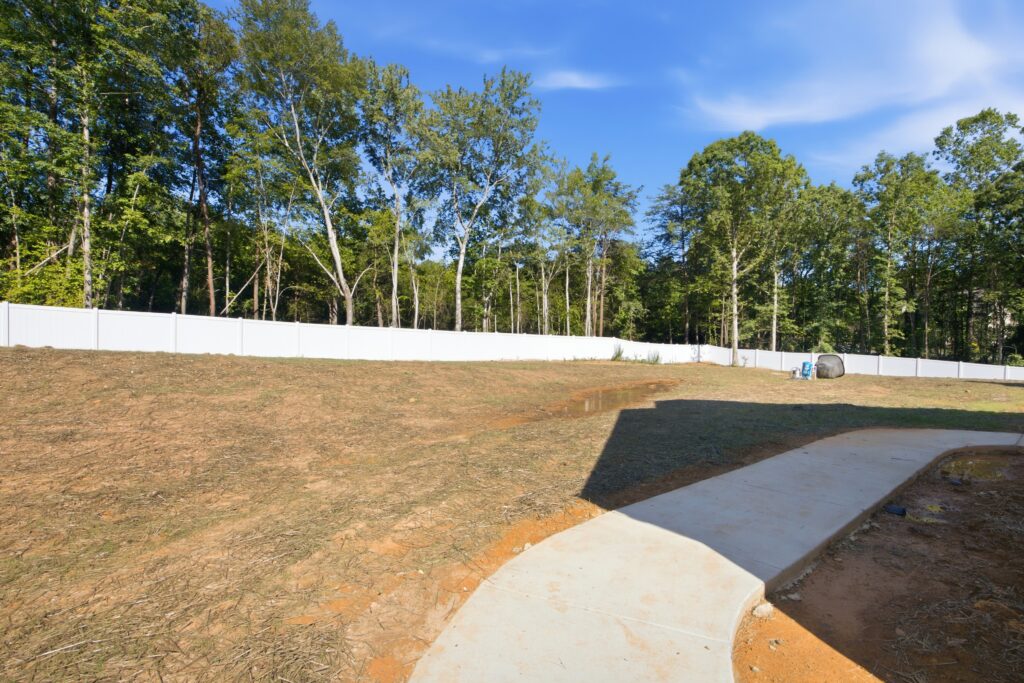
Site conditions are the most variable and least visible pricing factor in any custom home project. Two lots priced similarly on the market can carry dramatically different preparation costs based on terrain, soil, tree coverage, and utility access.
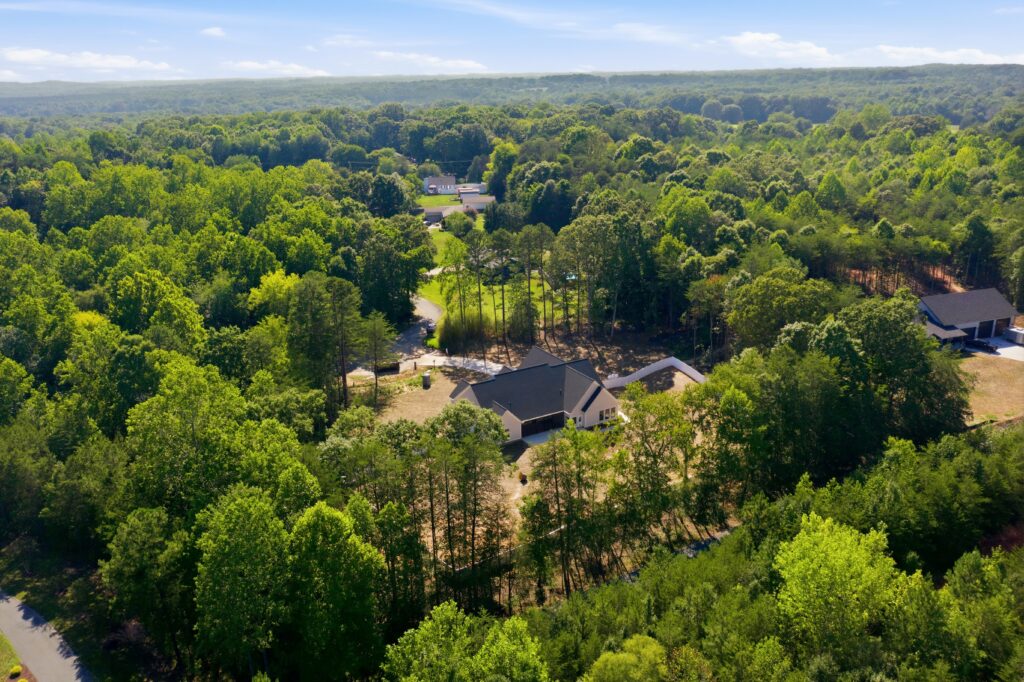
A flat, cleared lot in an established Cornelius neighborhood with utilities at the property line needs modest site work. A wooded, sloped parcel in Sherrills Ford without utility infrastructure may require clearing, grading, retaining walls, a well, and a septic system. The cost difference between those two starting points can exceed $80,000.
Custom home builder prices that don’t reflect a specific lot assessment aren’t based on real information. We conduct a full site evaluation before any budget is presented. That step is non-negotiable.
Factor 2: Foundation Type
Foundation design is driven by soil conditions, terrain, and the home’s structural requirements. A flat lot with stable soil supports a standard slab or crawl space foundation. Rocky terrain near Iron Station or clay-heavy soil in Mooresville may require engineered footings, helical piers, or a stepped foundation.
Walkout basements and multi-level foundations on sloped sites add more cost than single-level foundation designs. The lot determines what the foundation must be. The foundation determines a significant portion of the structural cost.
Factor 3: Home Size and Footprint Efficiency
Larger homes cost more in absolute terms. But size alone doesn’t determine cost per square foot. Footprint efficiency matters more than raw square footage.
A compact, well-planned two-story home costs less per square foot than a sprawling single-story design of the same total area. The two-story design uses one foundation and one roof to cover twice the living area. A complex footprint with many corners, bump-outs, and roofline intersections adds framing, material, and labor cost regardless of total size.
Architect Kharla Dayrit designs homes that balance visual interest with construction efficiency. That balance directly affects custom home builder prices without reducing the quality or character of the finished home.
Factor 4: Specification Level
Specification level is where the most significant cost variation between quotes occurs. Two builders quoting the same square footage at different price points are almost certainly building to different specifications.
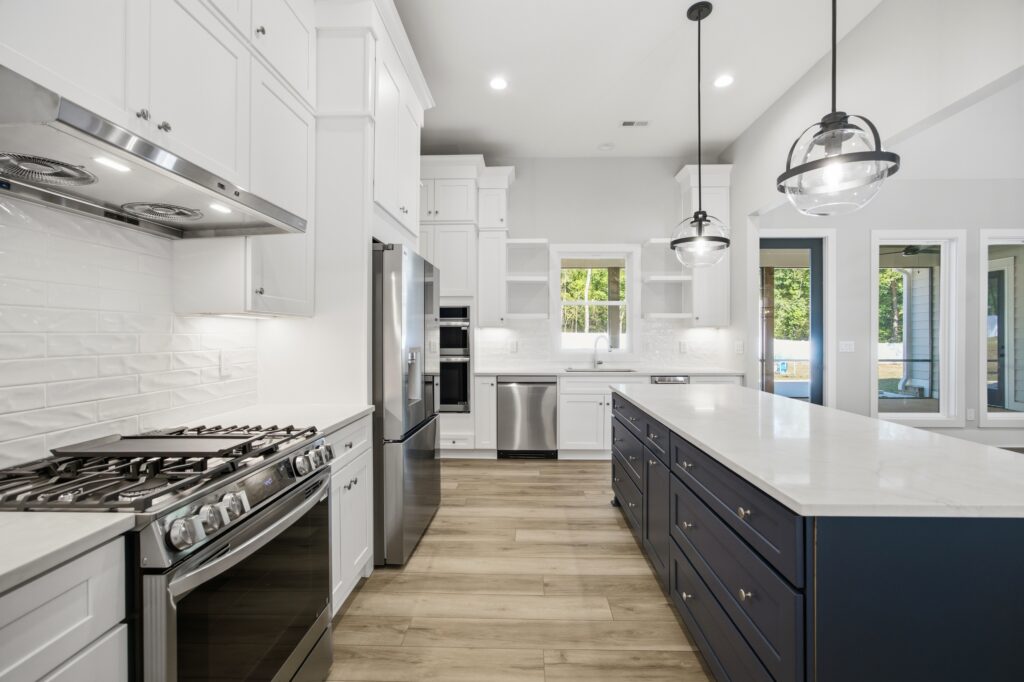
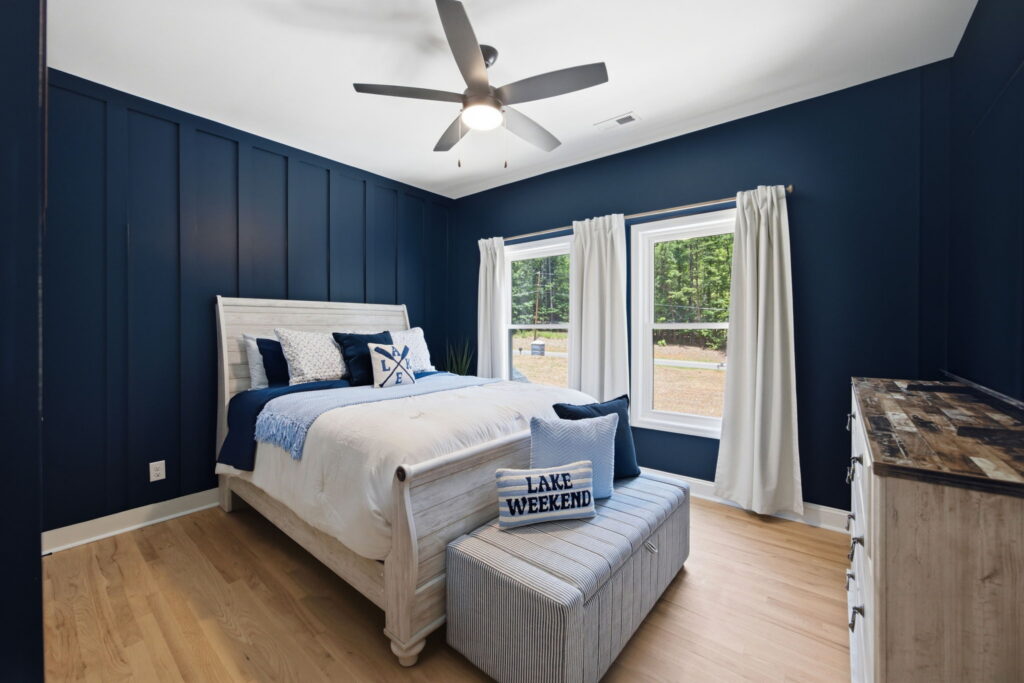
Standard specification includes builder-grade cabinetry, entry-level fixtures, basic flooring, and standard window packages. A mid-range specification steps up to quality cabinetry, quartz counters, hardwood flooring, and better windows. A premium specification adds custom millwork, high-performance windows, designer fixtures, and luxury finishes throughout.
Each tier represents a meaningful cost difference per square foot. Custom home builder prices are meaningless without knowing which specification tier the number assumes. We define specification level clearly in every budget so clients know exactly what they’re comparing.
Our detailed breakdown of custom home builder prices covers what each specification level includes and how those choices affect the total.
Factor 5: Structural Complexity
Roofline complexity, ceiling heights, open-span structural elements, and specialty framing all affect cost. A simple gable roof costs less than a complex roofline with multiple intersecting planes, dormers, and varying pitches.
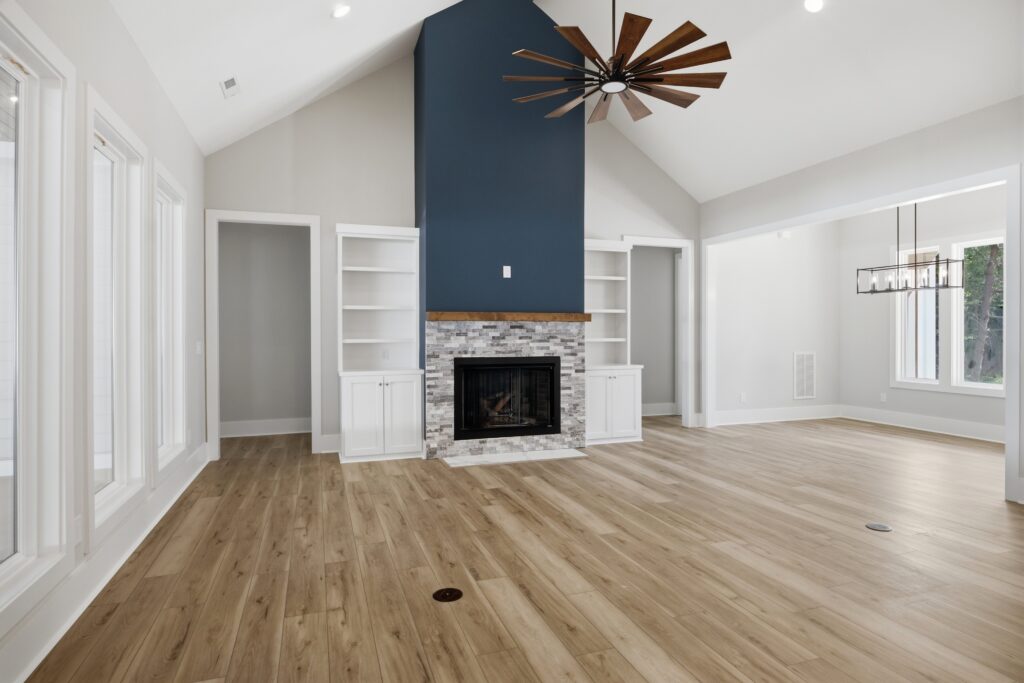
Vaulted ceilings and open great rooms require engineered beams and more complex framing. Large spans of glass require structural support that standard framing doesn’t. These design choices add character but also add cost. Understanding the relationship between design decisions and structural cost helps households prioritize what matters most.
Factor 6: Mechanical Systems
HVAC, plumbing, and electrical systems are significant cost components that vary based on home size, system quality, and design complexity.
Zoned HVAC systems for larger homes cost more than single-zone systems. High-efficiency equipment carries a higher upfront cost with lower long-term operating cost. Radiant floor heating, whole-home generators, and smart home integration add further to the mechanical budget.
In the Lake Norman area’s humid climate, properly sized HVAC with humidity control capability is essential, not optional. Undersizing the system to reduce upfront cost creates comfort problems and higher long-term energy cost. We factor climate-appropriate mechanical sizing into every project budget from the start.
Factor 7: Permitting, Fees, and Site-Specific Costs
Permitting fees, impact fees, and utility connection fees are real costs that belong in every project budget. These vary by county and municipality in ways that significantly affect the total.
Lincoln County and Iredell County have different fee structures. Municipalities like Mooresville, Davidson, and Huntersville carry their own impact fees for new construction. HOA architectural review fees add cost in many communities.
These aren’t costs a builder controls, but they’re costs a knowledgeable local builder anticipates and includes in the budget. Out-of-area builders unfamiliar with the local fee landscape routinely underestimate this category.
Factor 8: Builder Experience and Trade Network
Builder experience affects cost in ways that aren’t always obvious. An experienced builder with established local trade relationships manages the project more efficiently. Fewer errors, fewer rework cycles, and more reliable scheduling all reduce the total cost of construction even when the upfront price is similar.
A builder without established trades may pay more for labor or experience delays that add financing cost. A builder unfamiliar with local county permitting may face correction cycles that extend the timeline and add carrying cost.
The relationship between builder quality and total project cost is real. Lower custom home builder prices from an inexperienced builder often produce higher total costs once delays, errors, and rework are factored in.
Factor 9: Timeline and Market Conditions
Construction timelines affect cost through financing. A project that runs longer than planned accrues more interest on the construction loan. Material costs can shift during a build if supply chain conditions change.
Building during periods of high trade demand can affect subcontractor availability and pricing. In the Lake Norman area’s active construction market, scheduling reliable trades at fair prices requires established relationships that take years to build.
We build honest, realistic timelines into every project. Bi-weekly progress updates and optional job site camera access keep clients informed throughout. That transparency extends to any cost implications when market or schedule conditions shift.
The National Association of Home Builders publishes national data on construction cost components that provides useful context for evaluating how local custom home builder prices compare to national benchmarks.
For homeowners verifying builder credentials before evaluating quotes, the NC Licensing Board for General Contractors provides a free license verification tool that confirms active licensing and standing.
Frequently Asked Questions
What are the main custom home pricing factors in Lake Norman?
The main factors are lot and site conditions, foundation type, home size and footprint efficiency, specification level, structural complexity, mechanical systems, permitting fees, and builder experience.
Why do two custom home quotes for the same square footage differ so much?
Quotes differ because specification level, site prep inclusion, permitting fees, and utility costs vary. A complete quote includes all cost categories. A low quote often excludes several of them.
Does the lot I choose significantly affect my custom home price?
Yes. Site conditions including terrain, soil, tree coverage, and utility access directly affect site preparation cost, which can vary by $50,000 to $80,000 or more between a simple and a complex lot.
How does specification level affect custom home builder prices?
Specification level is one of the largest cost variables. Moving from standard to premium finishes, fixtures, and systems can add $50 to $150 per square foot depending on the scope of upgrades chosen.
Are permitting and impact fees included in most custom home quotes?
Not always. These fees vary by county and municipality and are often excluded from base quotes. Always confirm whether permitting, impact fees, and utility connection costs are included in any estimate.
Know Every Factor Before You Commit to a Budget
Custom home pricing factors are knowable. Site conditions, specification level, structural complexity, mechanical systems, and local fees all have real numbers attached when a builder does the work of finding them honestly.
Next Horizon Homes has built across the Lake Norman region for over 22 years. Every budget we present accounts for every factor above, because a number that leaves any of them out isn’t a real budget.
When you’re ready for a complete, honest price built on real site conditions and clear specifications, reach out to our team and let’s build a number you can actually rely on.