Pricing guide · Updated for 2026
Custom Home Builder Prices in Lake Norman, NC: How Builders Price a Home and How to Compare Bids
Two builders can quote the same house $150,000 apart, and both can be honest. The gap is almost always in how each one priced the job: what is included, what sits in allowances, and who carries the risk when costs move. This guide shows you how to read a builder's price.
📍 Denver, NC · Mooresville · Cornelius · Huntersville · Sherrills Ford · Lincolnton
- Itemized pricing before work starts
- Change orders priced upfront
- 22+ years around Lake Norman
- NC GC License #82063
- Veteran-owned
- NAHB member
- Lake Norman HBA member
- 1-2-10 warranty, insurance-backed
- Design Center: Denver, NC 28037
Short answer
Custom home builder prices are set by one of four models: fixed price, cost-plus percentage, cost-plus fixed fee, or a guaranteed maximum price. In each case the total is built from construction costs, site work, allowances for finishes, and the builder's overhead and profit. Nationally, construction costs make up about 64% of a new home's sales price, and builder profit about 11% (NAHB, 2024). To compare builder prices fairly, line up the same plan, the same allowances, and the same site-work scope. Then compare the contract model and who pays when costs change.
Key takeaways
- Builders price homes four ways: fixed price, cost-plus percentage, cost-plus fixed fee, or a guaranteed maximum price.
- Nationally, construction is about 64% of a new home's price and builder profit about 11% (NAHB, 2024).
- Low bids usually hide low allowances, missing site work, or exclusions.
- Compare bids only after leveling allowances, site work, and how square footage is counted.
- Around Lake Norman, sewer vs. septic, slope, and town fees move a price as much as finishes do.
Where a builder's price actually goes
The National Association of Home Builders surveys builders on what makes up the price of a new single-family home. Its 2024 survey gives a useful map of where the money goes. The figures are for all new homes, not just custom builds:
| Component | Share of sales price | What it covers |
|---|---|---|
| Construction costs | 64.4% | Labor, materials, and subcontractors for site work, foundation, framing, systems, and finishes |
| Finished lot | 13.7% | Land with utilities and approvals (zero on your quote if you own the land) |
| Builder profit | 11.0% | The builder's margin |
| Overhead and general expenses | 5.7% | Office, supervision, insurance, software, staff |
| Sales commission | 2.8% | Mostly applies to production homes sold through agents |
| Financing costs | 1.5% | Builder's construction financing (often paid by the owner directly on custom builds) |
| Marketing | 0.8% | Advertising and model homes |
Source: NAHB Cost of Constructing a Home, 2024 survey.
Two takeaways for custom buyers. First, if you already own the land, a big slice of a typical new-home price simply isn't on your quote. Second, overhead and profit together run about 15 to 17% of a typical sales price. A bid that is far below its competitors usually got there by leaving something out, not by working for free.
The four ways builders charge for a custom home
| Pricing model | How it works | Who carries cost risk | Best fit |
|---|---|---|---|
| Fixed price (lump sum) | One total is agreed before construction, based on final plans and specifications | Builder, except for changes you request | A fully designed home where plans and selections are settled |
| Cost-plus percentage | You pay actual costs plus a percentage fee, often 10 to 25% | Owner. The fee also rises as costs rise. | Projects with uncertain scope, such as complex renovations |
| Cost-plus fixed fee | You pay actual costs plus a set dollar fee | Owner on costs, but the builder's fee doesn't grow with them | Owners who want open books without a fee that scales with spending |
| Guaranteed maximum price (GMP) | Cost-plus with a ceiling. The builder absorbs costs above the cap. | Shared | Larger custom homes where some details are still open |
You'll also hear "price per square foot." That isn't a contract model. It is a way of quoting or comparing, and on its own it hides more than it shows.
Why price-per-square-foot quotes mislead
A per-square-foot number is a quotient: some total divided by some area. Builders don't all use the same total or the same area. Before you compare two numbers, ask:
- Which square feet? Heated living space only, or under-roof area that includes the garage, porches, and bonus rooms? The same house can look 20 to 30% cheaper per square foot if the garage and porches are counted.
- Is site work in or out? Clearing, grading, driveway, septic, well, and utility runs can be a large share of the budget on Lake Norman land. Many advertised numbers leave all of it out.
- What finish level is assumed? Builder-grade allowances and custom selections can differ by tens of thousands of dollars in the kitchen alone.
- Is design included? Architectural drawings, engineering, and the site plan may be separate line items.
- Are permits and tap fees in? Building permits, septic permits, and sewer or water tap fees vary by county and town.
Shape matters too. A simple two-story box costs less per square foot than a sprawling single-level home with several roof planes, because the foundation and roof, two of the expensive parts of any house, cover less area for each square foot of living space.
Allowances: the line items that move a bid the most
An allowance is a placeholder budget for something you haven't picked yet. If your final choice costs more, you pay the difference. If it costs less, you should get a credit. Allowances are the most common reason a low bid ends up as a high final price, because a builder can make a bid look lean by setting allowances too low for the house you actually want.
| Common allowance | What to confirm |
|---|---|
| Cabinets | Construction type (framed or frameless), door style, soft-close hardware, whether crown molding and panels are included |
| Countertops | Material level, edge profile, whether backsplash and cutouts are included |
| Flooring | Price per square foot for material and installation, which rooms are covered, stair treads |
| Tile | Material price, installation pattern, shower walls vs. floors only |
| Plumbing fixtures | Brand tier, number of fixtures, whether valves are included or only trim |
| Lighting | Fixture budget vs. recessed lighting count, exterior lighting |
| Appliances | Package level, range or cooktop type, ventilation hood |
Ask every builder for the dollar amount of each allowance, and whether it covers material only or material plus labor. Then ask what a typical client in your price range ends up spending in that category. A builder who can answer from experience is giving you a budget you can actually rely on.
How to compare three builder bids, apples to apples
Give every builder the same scope
Same plan, same square footage, same list of must-have features. If a builder suggests changes, ask them to price your scope first and their suggestion separately.
Normalize the allowances
Put each builder's allowances side by side. Raise any low ones to a realistic number and recalculate the totals. This one step often reorders the bids.
Separate site work
Ask for site work as its own section: clearing, grading, driveway, septic or sewer, well or water, power, erosion control, and any retaining walls.
List what's excluded
Exclusions belong in writing. Landscaping, gutters, window treatments, fencing, a dock or pier, and appliances are common gaps.
Compare the contract model
A fixed price and a cost-plus estimate are different kinds of promises. Count the risk you would carry, not only the number.
Compare change-order rules
Ask how changes are priced, whether a markup applies, and whether you approve the price before the work is done.
Compare the warranty
One year of workmanship coverage and a 10-year insured structural warranty are not the same as a one-year promise with nothing behind it.
Builder pricing red flags
- A firm price before anyone has walked the site or seen a plan
- A per-square-foot number with no list of what's included
- Allowances well below what comparable homes in the area use
- Site work described only as "by others" or "to be determined"
- No written process for pricing change orders
- A large upfront payment not tied to a milestone or a deliverable
- No license number on the proposal. In North Carolina, general contractors on projects of $40,000 or more must be licensed by the NC Licensing Board for General Contractors.
Lake Norman factors that move a builder's price
National averages are a starting point. These local conditions push custom home prices around the lake up or down:
Slope and rock
Many lake-area parcels slope toward the water. Walkout basements, taller foundations, retaining walls, and the occasional rock removal all add cost.
Septic vs. sewer
Lots without sewer need soil evaluation, permitting, and a septic system. Lots with sewer need a tap fee instead. The difference between the two can be meaningful.
Watershed limits
Built-upon area limits near the lake can change how much driveway, patio, and roof the site allows, which shapes the design.
HOA requirements
Some communities require minimum square footage, specific exterior materials, or architectural review. All of these affect price.
Waterfront features
Docks, piers, boathouses, and shoreline stabilization are priced separately and need a Duke Energy Lake Services permit.
Finish expectations
Lake homes are often designed around outdoor living: screened porches, outdoor kitchens, and large glass openings to the view.
See How Scope Changes From Plan to Plan
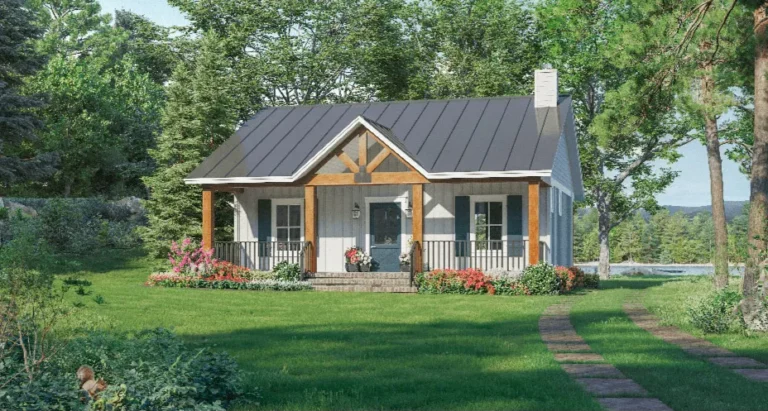
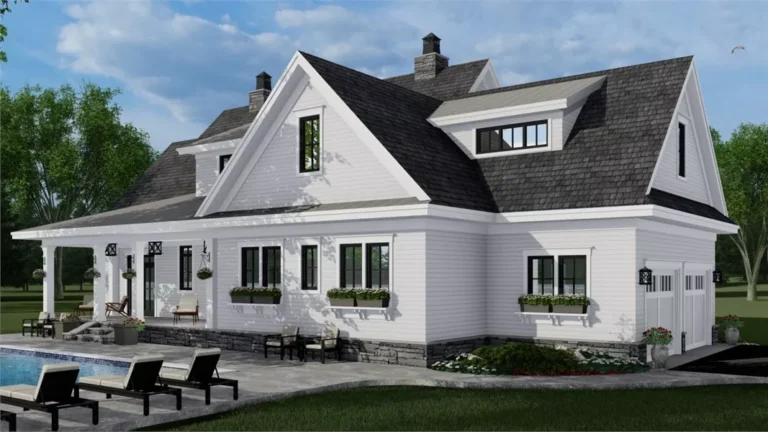
Builder pricing is easier to understand when it's tied to a real plan. These designs span a range of sizes, so you can see how scope grows from one home to the next.
Under 2,000 sq ft
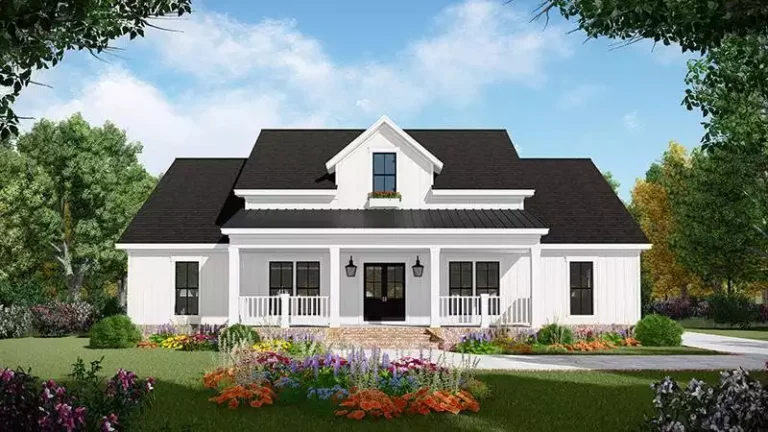
2,000 to 2,500 sq ft
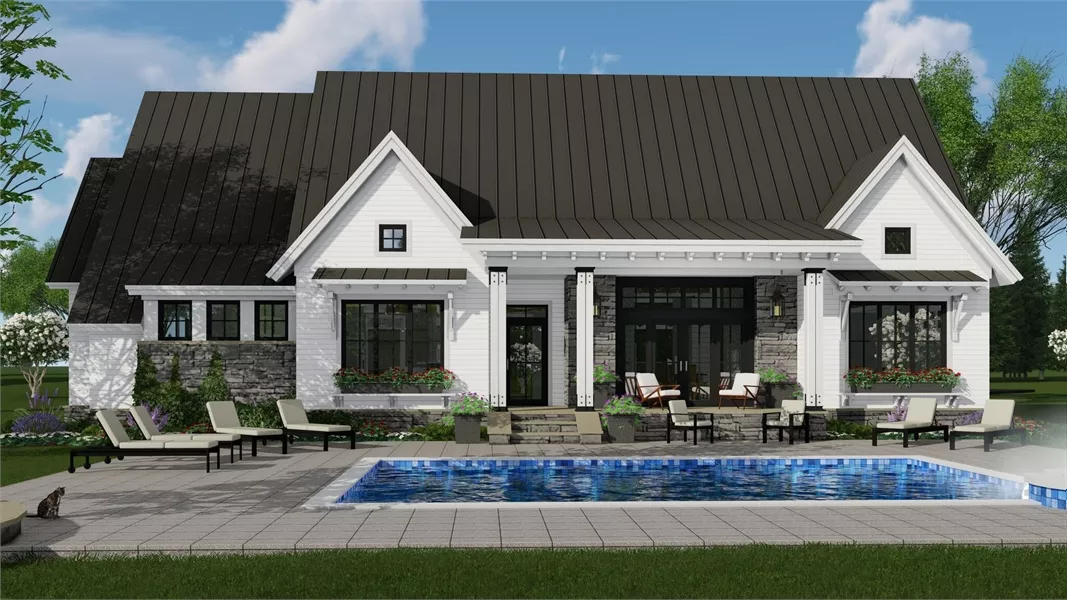
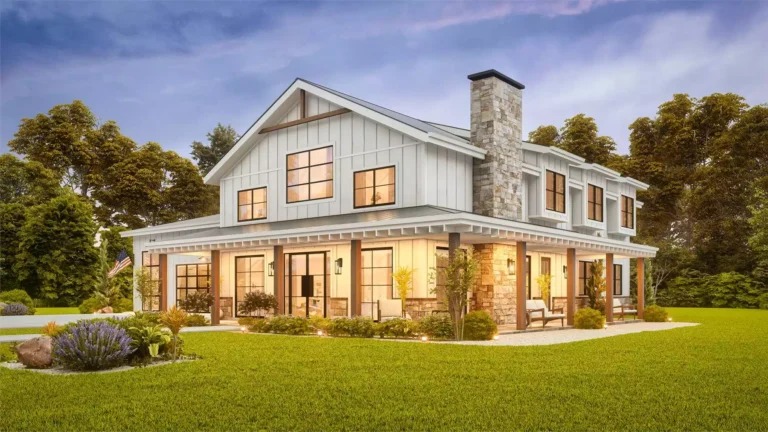
2,500 sq ft and up
How Next Horizon Homes prices a custom home
We don't publish a per-square-foot price, because on Lake Norman land the site alone can swing the total more than any finish choice. Here is how our pricing works instead:
Ballpark ranges at the first conversation
A free phone or Zoom consultation covers your goals and a realistic budget range for the kind of home you're describing.
Design and discovery
For a typical investment of $500 to $2,500, depending on scope, we evaluate the land, test feasibility against your budget, draw floor plans and elevations, and set allowances for major selections. Site work, permit fees, and utility connection fees are discussed openly at this stage.
Itemized pricing before you sign
The construction agreement includes a detailed cost analysis, a payment schedule tied to milestones, and a project timeline. The deposit, typically $5,000 to $30,000 depending on scope, covers construction drawings, permit fees, and a site plan if needed.
Upfront pricing on every change
If you add or upgrade something during the build, you see the price before the work happens. Bi-weekly Zoom updates cover budget as well as schedule.
What to ask for in a builder quote in each Lake Norman area
The same house gets priced differently in Cornelius than in Iron Station, mostly because of the site and the jurisdiction. Here is the line in a quote that deserves the hardest look in each area. For the full stage-by-stage breakdown, see custom built home cost.
| Area | What to ask for in the quote |
|---|---|
| Denver, NC Lincoln County · 28037 | Ask whether the quote assumes sewer or septic. In Lincoln County, temporary power also requires a deposit tied to the building permit fee, so confirm who carries it. |
| Sherrills Ford, NC Catawba County | Ask whether the address is inside the Southeast Catawba County Water and Sewer District. That decides between tap fees and a septic-and-well budget. |
| Lincolnton, NC Lincoln County | Ask how city vs. county jurisdiction was assumed. In-city lots with city utilities usually price very differently from rural acreage. |
| Iron Station, NC Lincoln County | Ask for the driveway and power run as separate lines. On rural Iron Station land, they are often the biggest site variables. |
| Maiden, NC Catawba & Lincoln Counties | Ask the builder to confirm which county the parcel is in before pricing permits and fees. |
| Mooresville, NC Iredell County | Ask whether town permit fees (inside town limits) or Iredell County fees were used, and whether HOA review fees and deposits are included. |
| Cornelius, NC Mecklenburg County | Ask whether demolition, old septic or well abandonment, and a tree removal permit are priced. Teardowns are common here. |
| Huntersville, NC Mecklenburg County | Ask which watershed zone the lot sits in. A 50-foot vs. 30-foot buffer changes the footprint and the price. |
| Davidson, NC Mecklenburg County | Ask whether the exterior allowances reflect any design review that applies to the lot, especially near the town center. |
| Lake Hickory area Catawba County | Ask whether any dock or shoreline work is priced separately, with its Duke Energy permit. |

Custom home builder prices: FAQs
How do custom home builders set their prices?
Builders estimate labor, materials, and subcontractor costs for each phase, add site work, set allowances for selections not yet made, then add overhead and profit. The contract model (fixed price, cost-plus, or a guaranteed maximum price) determines who pays if those costs change.
Is cost-plus or fixed price better for a custom home?
Fixed price usually suits a new home with settled plans and selections, because the builder carries the risk of overruns. Cost-plus suits projects with uncertain scope, but the owner carries the cost risk. A guaranteed maximum price sits between the two.
What percentage do custom home builders charge?
Cost-plus fees commonly range from about 10 to 25% of construction costs. Across all new homes, NAHB's 2024 survey put builder profit at about 11% of the sales price and overhead at about 5.7%.
Why are builder quotes so different for the same house?
Usually because of differences in allowances, site work, exclusions, and how square footage is counted. Line up those four items and most of the gap explains itself.
Does the price include site work?
Not always. Many advertised prices exclude clearing, grading, the driveway, septic or sewer, the well or water connection, and utility runs. Always ask for site work as a separate, itemized section.
Why doesn't Next Horizon Homes publish a price per square foot?
On land around Lake Norman, site conditions such as slope, septic, wells, watershed limits, and access change the total too much for one number to be honest. We give ballpark ranges at the first call, then an itemized price after design and discovery.
Can a builder price my home without plans?
A builder can give a range. A reliable price needs a site evaluation, a floor plan and elevations, and allowances for selections. Without those, a firm number is a guess.
Are custom home builder prices higher in Cornelius than in Lincolnton?
Often, yes, but mostly because of the site, not the house. Small, high-value Cornelius lots often involve teardowns, tighter setbacks, and more complex design. Rural Lincolnton land may need a well, septic, and a long driveway instead. Compare itemized site work, not totals.
Do builder prices include permit fees in Lake Norman towns?
Ask. Permit fees depend on the jurisdiction: Lincoln, Catawba, or Iredell County, the Town of Mooresville, or Mecklenburg County with town zoning in Cornelius, Huntersville, and Davidson. A good quote lists them.
Sources and references
Get a price you can actually build to
Start with a free conversation. Leave design and discovery with plans, allowances, and an itemized budget built for your land.