When you buy land to build a home, one decision quietly shapes your budget, your timeline, and your lot’s usability: how the home handles wastewater. The build on your own land septic vs sewer decision affects thousands of dollars in cost and can determine whether a lot is even buildable as planned. After 22+ years of building across Denver, Mooresville, Cornelius, Huntersville, Davidson, Sherrills Ford, Lincolnton, Iron Station, and Maiden, we’ve guided countless families through this exact question. This guide explains what to understand before you buy or build.
Why Wastewater Handling Matters More Than Most Buyers Realize
Wastewater handling is not a small detail. It affects site design, lot layout, cost, and permitting. On some lots, it determines whether the home you want can be built at all.
Two options exist: connect to a public sewer system, or install a private septic system. The right choice depends on what’s available at the lot and what the land can support. Understanding both options early prevents costly surprises.
When you build on your own land, this decision deserves attention before purchase, not after. A lot that can’t support the home’s wastewater needs is a lot with a serious problem.
Understanding the Two Options
Public Sewer Connection
A public sewer connection ties the home to a municipal wastewater system. Waste flows through the connection to a treatment facility managed by the municipality or utility.
Public sewer is common in developed areas. Established neighborhoods in Cornelius, Huntersville, Davidson, and parts of Mooresville often have sewer access. Where available, connection is typically straightforward, though connection and impact fees apply.
Sewer connection removes the maintenance burden of a private system. There’s no tank to pump, no drain field to protect, and no system to eventually replace.
Private Septic System
A septic system treats wastewater on the property. Waste flows to a tank, then disperses through a drain field into the soil. The system operates entirely on the lot without any municipal connection.
Septic is common in rural areas. Lots in Sherrills Ford, Iron Station, Maiden, and rural Lincoln County often rely on septic because sewer infrastructure doesn’t reach them. A septic system requires suitable soil and adequate space for the drain field.
Septic carries ongoing responsibility. Tanks need periodic pumping, drain fields need protection, and systems eventually require repair or replacement.
The Build on Your Own Land Septic vs Sewer Decision: Key Factors
Availability at the Lot
The first question is simple: is sewer available at the lot? If a public sewer line runs to or near the property, connection is usually the default choice. If no sewer line exists nearby, septic becomes the option.
Extending a sewer line to a lot without access is often prohibitively expensive. In most cases, a lot without nearby sewer access means a septic system is the practical path.
We confirm sewer availability for every lot before finalizing any plan. That confirmation shapes the entire site design and budget.
Soil Suitability for Septic
If septic is the path, the soil must support it. A soil evaluation and percolation test determine whether the ground can absorb and filter wastewater properly. This is required before a septic permit is issued.
Soil across the Lake Norman region varies. Clay-heavy soils in some areas drain poorly, which can require a larger drain field or an engineered system. Rocky soils near Sherrills Ford and Iron Station present their own challenges.
If standard septic isn’t feasible, an engineered or alternative system may be required. These systems cost significantly more than conventional septic. Knowing the soil situation before buying land is essential.
Lot Size and Layout
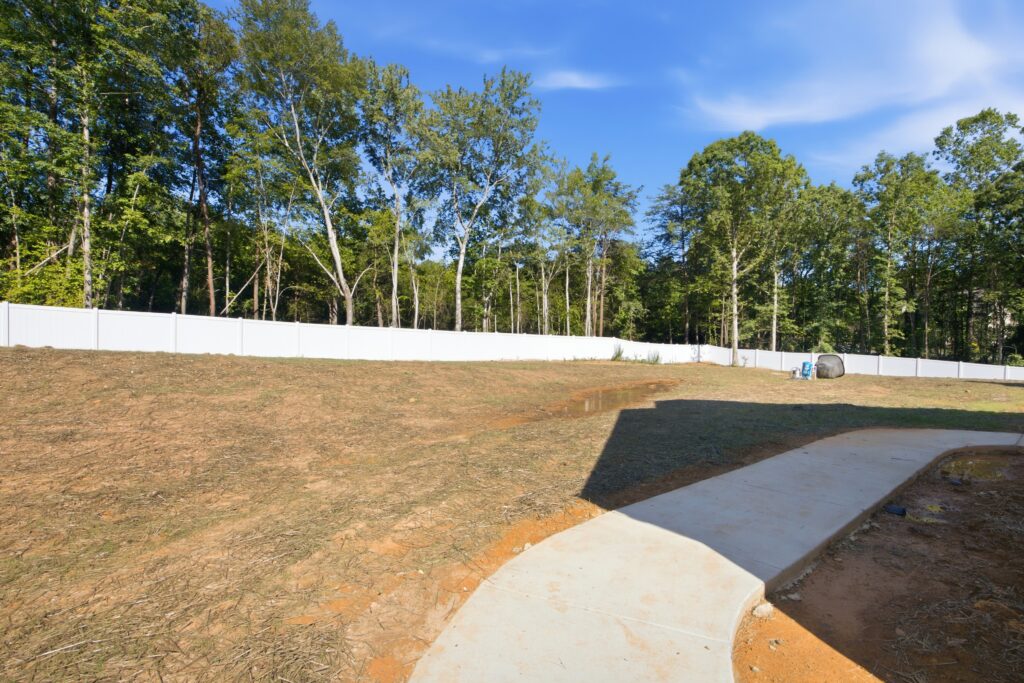
Septic systems need space. The drain field requires a defined area of suitable soil, plus a reserve area for future replacement. On smaller lots, fitting the home, driveway, and septic system within setbacks can be challenging.
Sewer connection frees up that space. Without a drain field to accommodate, the lot layout has more flexibility. On tight lots, sewer access can be the difference between a workable design and a constrained one.
Cost Comparison: Septic vs Sewer
Upfront Costs
Cost is a central factor in the build on your own land septic vs sewer decision. Each option carries different upfront expenses.
Sewer connection costs include connection fees, impact fees, and the cost of running a line from the home to the sewer main. These vary by municipality but are generally predictable.
Septic installation costs vary widely based on system type. A conventional system is the least expensive. An engineered or alternative system, required when soil conditions are poor, costs substantially more. Soil testing and permitting add to the total.
We provide accurate cost estimates for both options based on the specific lot. Those numbers inform the decision before land purchase, not after.
Long-Term Costs
Long-term costs differ too. Sewer carries ongoing monthly service fees but minimal maintenance responsibility. Septic has no monthly service fee but requires periodic pumping and eventual system replacement.
Over decades, both carry cost. The right choice depends on availability, lot conditions, and homeowner preference, not just the upfront number.
Our overview of the build on your own land process covers how wastewater decisions fit into the full project cost picture alongside site prep and construction.
Permitting Differences Between Lincoln and Iredell County
Permitting for wastewater systems differs across the region. Lincoln County and Iredell County each manage septic permitting through separate health departments with their own review processes and timelines.
A septic permit requires soil evaluation, a percolation test, and health department approval before the building permit is issued. This process takes time and must be factored into the project schedule. In busy periods, health department scheduling can add weeks.
Sewer connection permitting follows the municipal process where the lot sits. Requirements and fees vary between jurisdictions like Cornelius, Mooresville, and Huntersville.
We navigate both processes routinely. When you build on your own land, knowing the specific permitting path for your lot and county prevents timeline surprises.
How This Decision Affects Site Design
The wastewater choice shapes the entire site plan. A septic system dictates where the drain field goes, which affects where the home, driveway, and outbuildings can sit. The reserve area for future replacement adds another spatial constraint.
Sewer connection removes those constraints, giving the site design more flexibility. On lots where layout is tight, this flexibility matters.
Architect Kharla Dayrit factors wastewater requirements into every site plan from the start. Whether septic or sewer, the design accounts for it early, preventing the redesigns that happen when wastewater is treated as an afterthought.
Site Preparation and Cost Awareness
Wastewater handling ties directly into overall site preparation. On a septic lot, drain field installation is part of site prep. On a sewer lot, running the connection line is part of site prep. Either way, it’s a real cost that belongs in the budget.
Site prep costs across the Lake Norman region vary significantly. A rural lot requiring a septic system, well, and extensive clearing carries higher site prep costs than a developed lot with utilities at the property line. We evaluate all of this before providing a budget.
The National Association of Home Builders publishes resources on residential wastewater systems that provide useful national context alongside the Lake Norman-specific considerations covered here.
For homeowners verifying builder credentials as part of planning, the NC Licensing Board for General Contractors provides a free license verification tool that confirms active licensing and standing.
How We Guide the Decision
Founder Matt Phillips built Next Horizon Homes on a no-surprises process. The wastewater decision is exactly where that process protects homeowners.
We confirm sewer availability, evaluate soil for septic feasibility, and provide accurate cost estimates for both options before land purchase whenever possible. Bi-weekly progress updates and optional job site camera access keep the household informed through the entire build, including wastewater installation.
For families ready to understand what building on their own land actually involves, our build on your own land resource covers the full sequence from site evaluation through move-in.
Frequently Asked Questions
What determines the build on your own land septic vs sewer decision?
Availability at the lot is the primary factor. If public sewer is accessible, connection is usually the default. If not, soil suitability determines whether a septic system is feasible.
How much does a septic system cost compared to sewer connection?
Costs vary by lot. Conventional septic is often comparable to sewer connection fees, but engineered systems for poor soil cost significantly more. Sewer adds ongoing monthly service fees.
Do I need a soil test before installing septic in Lake Norman?
Yes. A soil evaluation and percolation test are required before a septic permit is issued. These determine whether the soil can support a system and what type is needed.
Can every lot support a septic system?
No. Poor soil, insufficient space, or high water tables can make conventional septic infeasible. Some lots require engineered systems, and a few can’t support septic at all without major cost.
How does wastewater choice affect my lot layout?
Septic requires space for a drain field and a reserve area, constraining where the home and driveway sit. Sewer connection removes that constraint, giving the site design more flexibility.
Decide on Wastewater Before You Commit to the Land
The build on your own land septic vs sewer decision shapes cost, site design, and buildability. Confirm sewer availability first. If septic is the path, evaluate soil suitability before purchase. And factor the full cost and permitting timeline into your budget from the start.
Next Horizon Homes has guided families through this decision across the Lake Norman region for over 22 years. We know the soil conditions, the county permitting differences, and the cost realities that make this decision manageable rather than mysterious.
When you’re ready to evaluate what your lot can support, reach out to our team and let’s assess the wastewater options for your specific property together.